

Brake test certificates without the retyping.
PRISM Certify is our platform for companies that brake-test mining vehicles. Test results come off the brake tester, the technician adds what the device can't know, and the certificate and report pack build themselves. Around it sits a register of every client, site and vehicle, with the next test date already worked out.
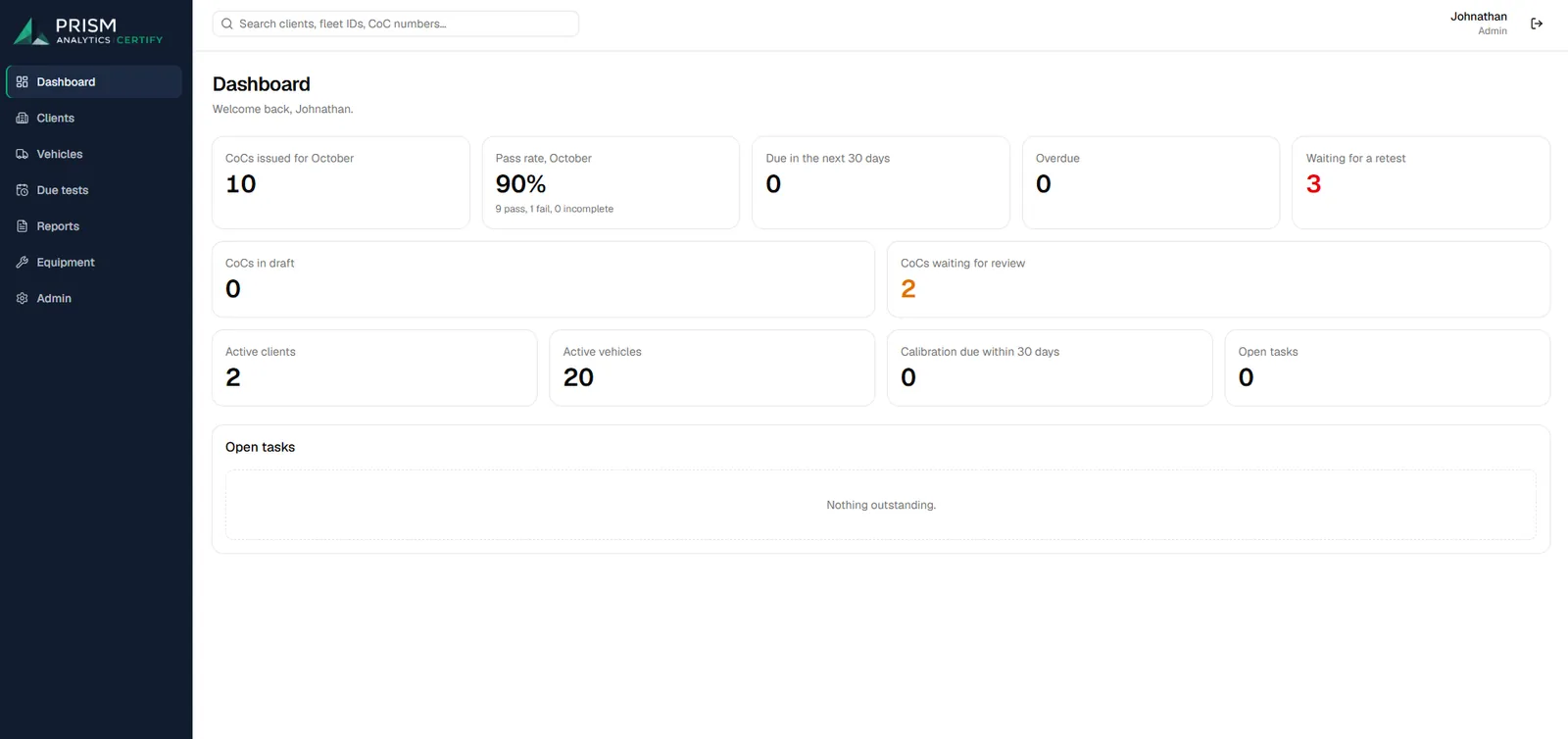
Every test result gets typed out twice.
A brake test on a mine vehicle ends in a certificate of compliance, and that certificate is usually a spreadsheet. The technician runs the tests, the tester prints a slip for each run, and someone retypes the numbers into a workbook. Then a report pack is assembled by hand for every site visit: a cover page and one certificate per vehicle.
Retyping is where the errors get in. And a workbook per visit cannot say which vehicles are due next month, which failed and are still waiting for a retest, or how one vehicle's brakes have trended over the year.
From the test strip to the signed certificate.
On site, on a tablet
Test runs arrive from the brake tester, with the raw device data kept beside the parsed values. The technician fills in what the device doesn't know, such as conditions, tyres, brake temperatures and weights, and the customer's representative signs on the screen.
Rules as code
The assessment engine applies the testing company's own rules and marks each run Pass, Fail or Incomplete. Numbers are allocated when a certificate is issued, the PDFs carry the testing company's branding, and an issued document is never edited. A correction is a new revision.
Know what's due
Each vehicle carries its full test history and its next test date. The due list groups overdue, due-soon and waiting-for-retest vehicles by site, so the next visit can be planned straight from it. Test equipment is tracked against its calibration dates.
One vehicle, every test it has ever had.
Screens show demonstration data. Client names have been replaced.
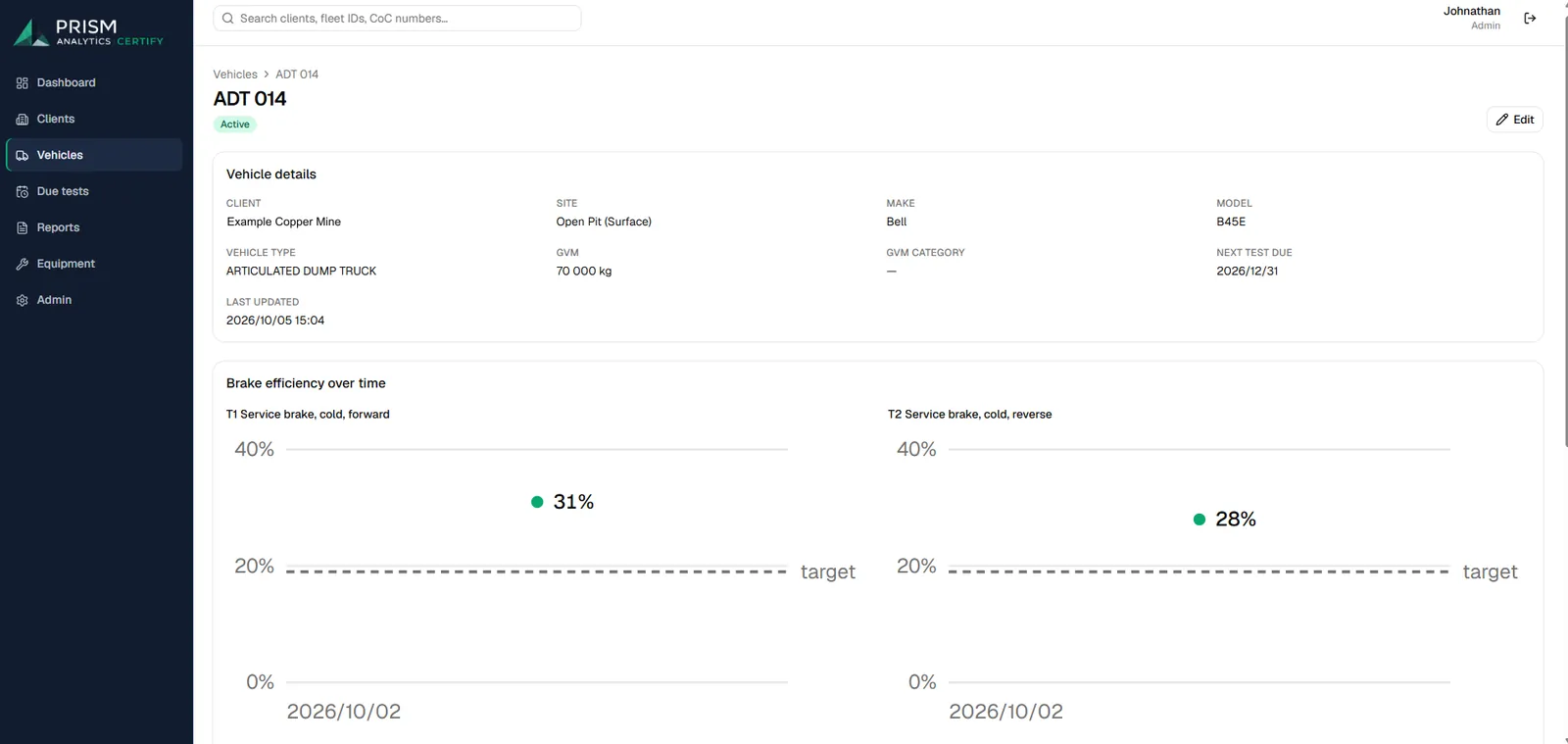
Vehicle history
Every vehicle has its details, its next test date and its brake efficiency charted per test type against the target line. One test is a dot. A year of tests is a trend the fleet engineer can act on before the vehicle fails.
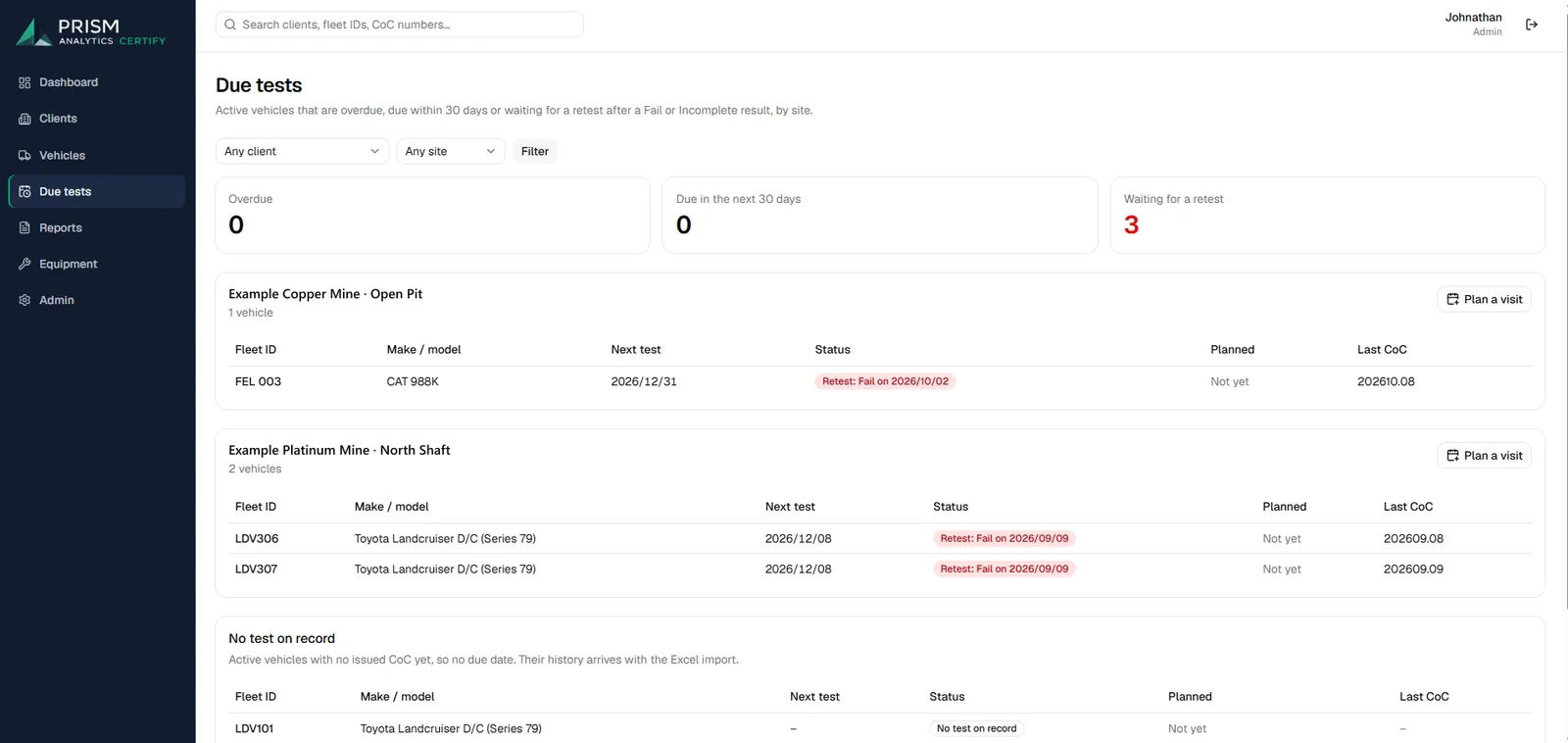
Due tests
Vehicles that are overdue, due within thirty days or waiting for a retest after a Fail, grouped by client and site, each group with its own Plan a visit button. Vehicles with no test on record are listed separately, so nothing goes missing quietly.
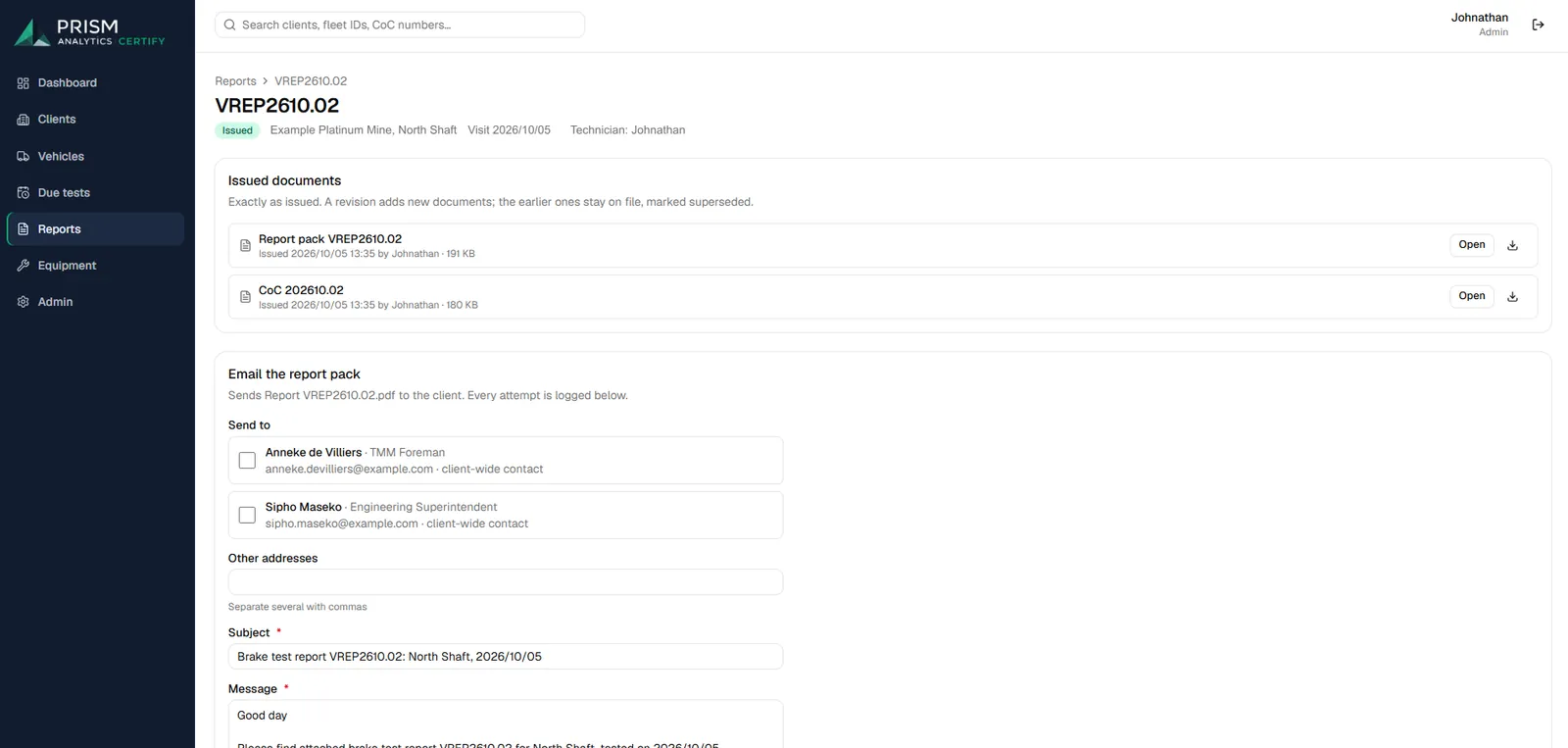
Report pack and delivery
A site visit becomes one report: the report pack and each certificate, stored exactly as issued. The pack is emailed to the client's contacts from the same screen, in the testing company's name, and every send attempt is logged.
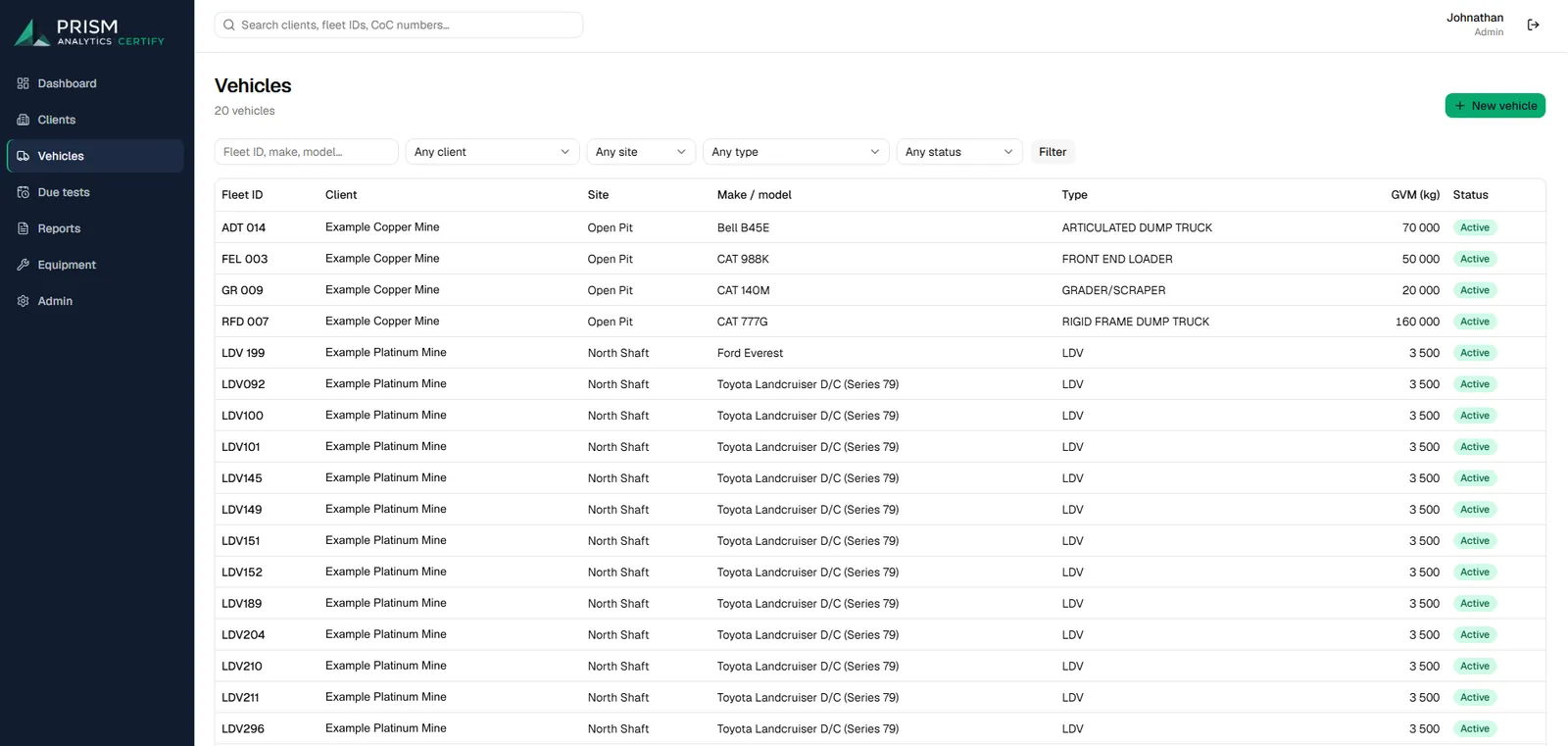
Vehicle register
Every vehicle under test, by client and site, with its type and gross vehicle mass, filterable down to one site's fleet. It is the thing a folder of workbooks never was: one list, searchable by fleet ID.
Built so a certificate can be defended later.
The assessment engine is plain code with a test behind every rule. Rules change by adding a new version, never by editing an old one, and each certificate records the version it was assessed under. Every create, update and issue is written to an audit log.
Built and running on demonstration data. Live tests from the device and the first production certificates are the next step.
Ask for a walkthrough